
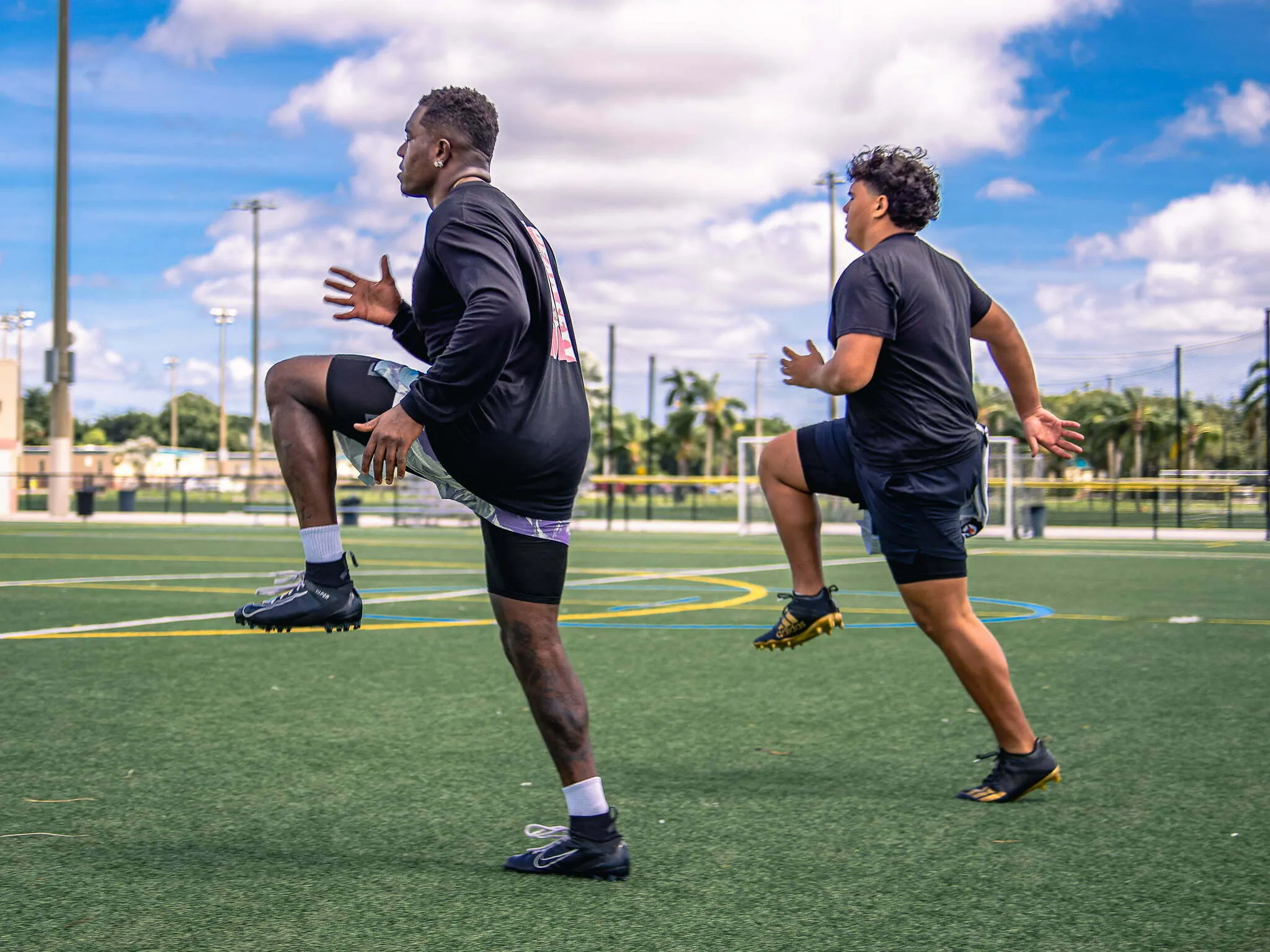
Track, Cross Country, and Swimming Photography
Endurance sports are about grit, pain, and the finish line. These athletes push themselves to their limits, and the photos should show it.
The Endurance Sports Challenge
Track, cross country, and swimming have something in common: the athlete is doing the same thing for a sustained period, and the drama builds gradually until it breaks open at the finish. These are not sports where the action happens in bursts. The story is in the building effort, the face at mile two that looks completely different from mile one, and the collapse across the finish line.
Photographing endurance sports requires patience and knowing where to be at the right moment. I cannot follow a cross country runner through the woods. I cannot run alongside a swimmer in the pool. So I pick my spots carefully and make every position count.
Track and Field Photography
Track meets are chaotic in the best way. Multiple events happening simultaneously: sprints on the straightaway, long jump in the infield, discus on the far side. I prioritize based on where your kid is competing, but I always keep an eye on the full meet.
My approach by event type:
- Sprints (100m, 200m, 400m): I position at the finish line and shoot head-on. The leaning, straining, arms-pumping finish is the shot. For the 200m, I also shoot the curve where runners are banking and fighting for position.
- Distance (800m, 1600m, 3200m): I move around the track during longer races. The start, a mid-race position where I can see the pack, and the finish. The faces change dramatically over the course of a 3200. That progression tells the story.
- Hurdles: One of the most photogenic track events. I set up at a hurdle and shoot low, catching the clearance with the runner fully extended. At Potts Field in Boulder, hurdle 3 or 4 usually has the best background.
- Field events: Long jump, high jump, pole vault, and throws each have their own peak moment. I time the shutter for the apex of the jump or the release of the throw. These events are slower-paced, which lets me get creative with angles.
Cross Country
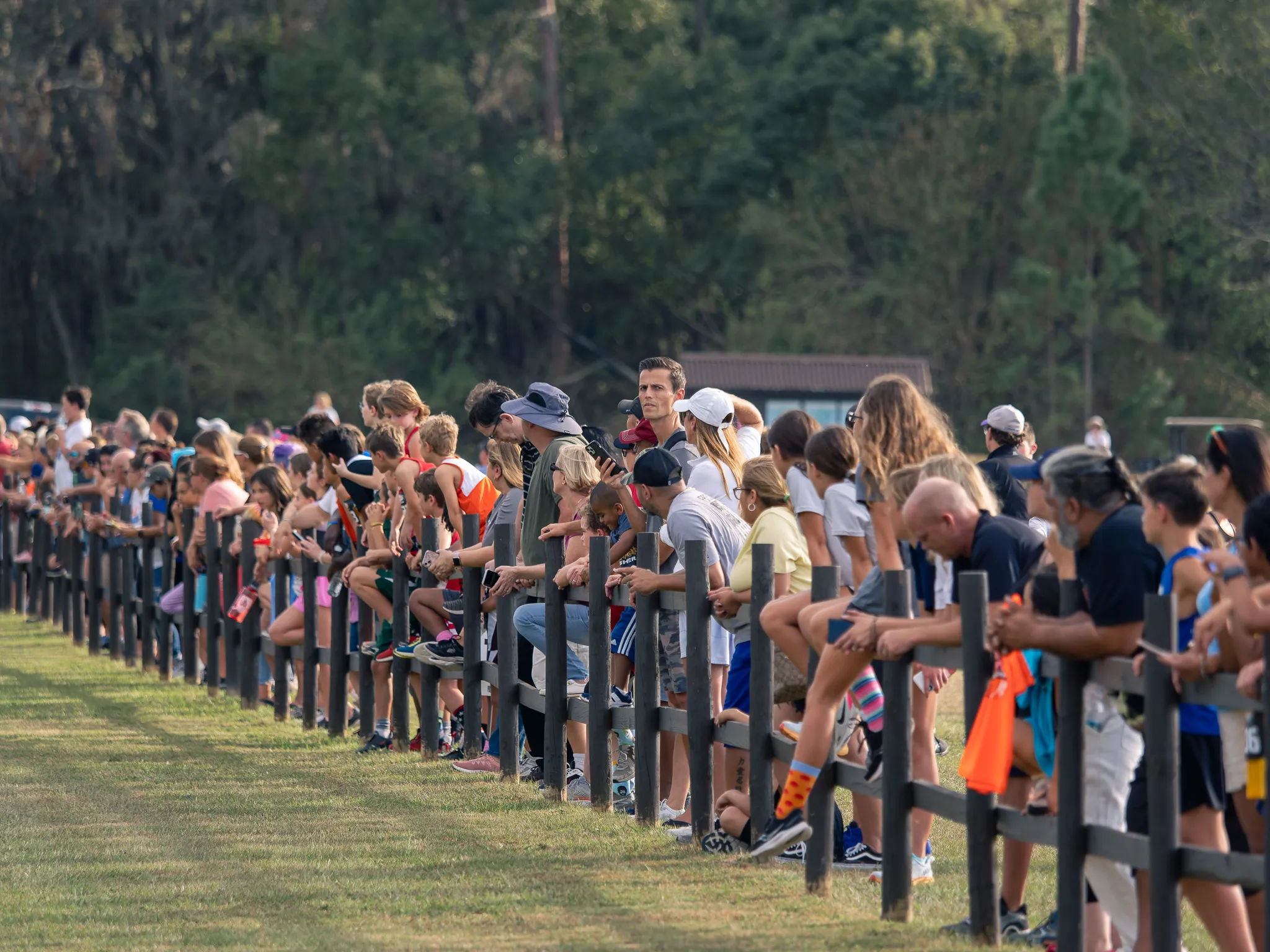
Cross country is one of the toughest sports to photograph. The course winds through open fields, tree cover, hills, and sometimes mud. I cannot follow the runners, so I scout the course before the race and pick 3 to 4 positions:
- The start: A wall of runners surging forward. Pure energy. I shoot wide to show the pack and tight to find individual faces of determination.
- Mid-course: I pick an open section where light is good and the background is not a parking lot. At Harrier Park in Boulder and the courses at North Boulder Park, I know which spots give me clean sight lines and decent light under the trees.
- The hill: Every good cross country course has a punishing hill. That is where effort shows most visibly. Heads down, arms working, faces red. I love these shots.
- The finish: This is non-negotiable. I am always at the finish for the kick, the lean, the stumble across the line. Sometimes kids collapse. Sometimes they fist pump. Both make great photos.
Cross country in Colorado has an added advantage: the scenery. Fall meets with golden aspen in the background, courses at the base of the Flatirons, early season races with the mountains still snow-capped. The landscape becomes part of the story.
Swimming
Pool photography is its own world. The environment is hot, humid, loud, and the light bounces off the water in ways that confuse camera meters. Here is how I handle it:
- Glare management: I use a circular polarizing filter to cut through water surface reflections. Without it, every frame has a white glare strip across the lanes.
- The start: Swimmers on the blocks, coiled and ready. The dive entry is one of the most dramatic moments in swimming. I time it to catch the full extension before they hit the water.
- Turns: The flip turn is explosive. I position at the wall and shoot the push-off, feet planted against the tile, body rotating.
- Stroke shots: Butterfly and backstroke are the most photogenic strokes. Butterfly's arm recovery creates a dramatic wing-like shape with water streaming off. Backstroke lets me see the swimmer's face.
- The finish: Touching the wall and immediately looking at the scoreboard. The reaction, whether it is joy or disappointment, is pure and unguarded.
At Boulder's Scott Carpenter Pool, the CU aquatic center, and Longmont's Centennial Pool, the lighting and layout vary. I adjust my settings for each venue because the difference in ceiling height and light source can change exposure by two full stops.
What Parents Get
For endurance sports, the final gallery typically includes:
- Pre-race warm-up and focus shots
- The start (if applicable)
- Multiple mid-race action images showing effort and form
- The finish and immediate post-race reaction
- Cool-down, team huddles, and the quieter aftermath moments
These sports may not get the same attention as football or basketball, but the athletes work just as hard. The photos should reflect that.
Frequently Asked Questions
How do you photograph a cross country race when the course goes through the woods?
I scout the course beforehand and pick 3 to 4 positions where I can see the runners and the light is workable. Typically that includes the start, a point along an open section of trail, and the finish. I use a fast lens to handle the shade under the tree canopy and position where there are breaks in the foliage.
Can you get good photos at a swim meet with all the water and glare?
Yes. I use a polarizing filter to cut through water glare and shoot from elevated positions when possible. Turns, finishes, and the moments on the block before a race are where I focus. The pool environment is challenging but the emotion is intense, especially at close finishes.
At a track meet with multiple events, can you cover my kid in different events?
Absolutely. Tell me your kid's event schedule and I will plan my positioning around their events. Between their events, I fill the gaps by shooting other action happening on the track. I have covered enough meets at Potts Field and Centaurus to know the timing between events.
Photography Services
These services connect to the topics covered in this guide.
Have a question about your session?
I am happy to help. Send me a message and let's figure out the details.